Why Supporting Local Farmers Matters More Than Ever
We Cannot Go Back to Sleep
In 2022, I started the Wake Forest Local Food Collaborative with five neighbors.
Five.
At the time, the world had just lived through empty grocery store shelves, supply chain breakdowns, rising food costs, and a growing realization that maybe our food system wasn’t as secure as we thought it was.
People were waking up.
Families began asking questions:
Where does our food come from?
Who grows it?
What’s actually in it?
What happens if the system fails again?
And for the first time in a long time, people realized something incredibly important:
If we want real food, we have to know the people producing it.
What began as a few neighbors wanting trustworthy food has now grown into more than 1,800 local families connected through the collaborative. Watching that growth has been one of the most encouraging things I’ve ever experienced.
Every pickup day felt electric.
New families showed up excited to find eggs with deep orange yolks, truly pasture-raised meats, chemical-free produce, raw local honey, sourdough made from real ingredients, and farmers who could tell you exactly how the food was grown because they grew it themselves.
People weren’t just buying food.
They were rebuilding connection.
Rebuilding trust.
Rebuilding local resilience.
And I want people to understand something clearly: I did not create this collaborative as a business.
I do not earn money from it, and I never will.
This was built because I genuinely believed our community needed another way to access trustworthy food while directly supporting the people producing it. In fact, I’ve even helped others start similar collaboratives in places like Apex and Wilson because I believe this model matters and should spread.
But over the last year, I’ve noticed something shift.
Attendance is lower.
The urgency feels quieter.
And honestly, it feels like people are forgetting.
Forgetting what we learned. Forgetting how fragile the industrial food system really is, how toxic and chemically altered so much grocery store food has become and forgetting that if local farms disappear, we do not have food security.
We have dependency.
And those are not the same thing.
The Grocery Store Illusion
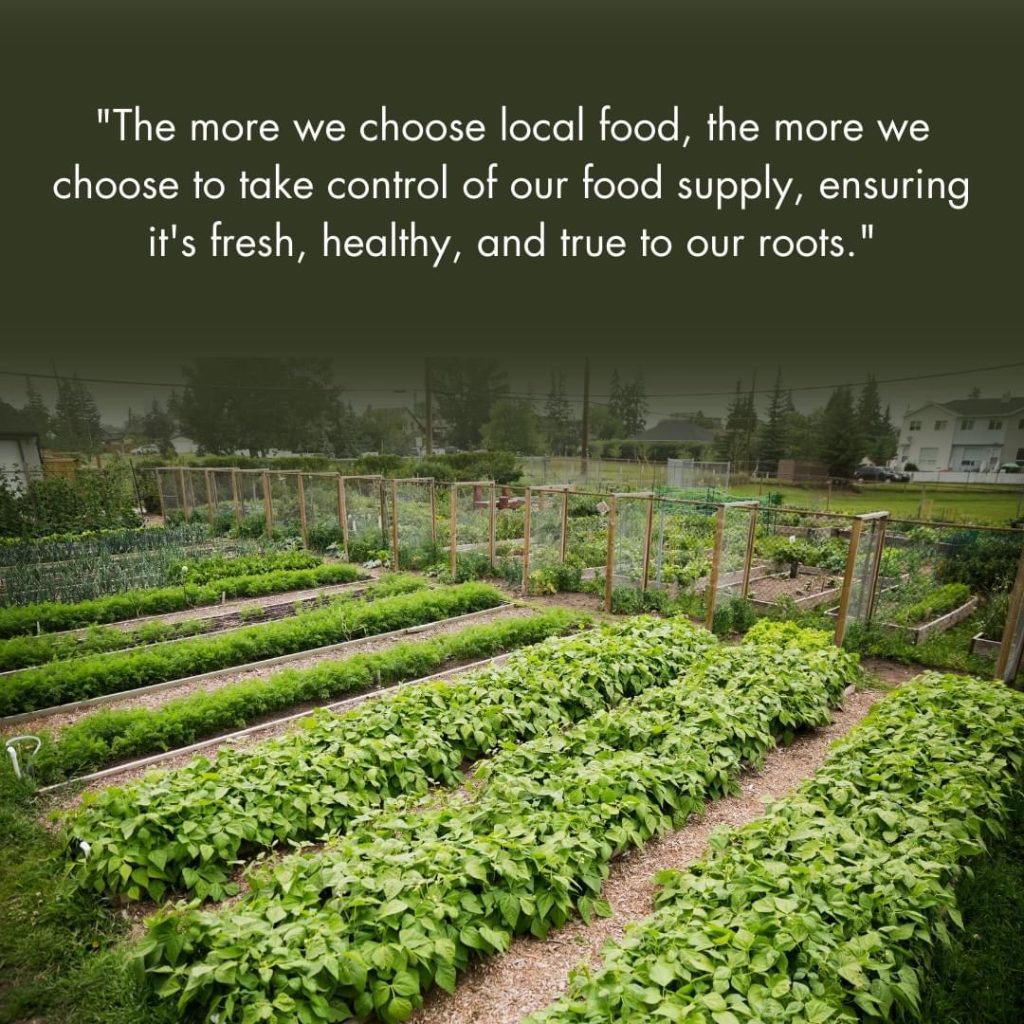
Most people still believe grocery stores equal security.
But grocery stores do not produce food.
Farmers do.
If local farms disappear, shelves may still look full for a while, but the quality, nutrient density, transparency, and sovereignty over our food will continue to decline.
The modern food system is dominated by industrial agriculture, long transportation chains, synthetic chemicals, seed oils, preservatives, artificial ripening, pesticide-heavy monocropping, and food engineered for shelf life instead of human health.
Many people today are overfed and undernourished at the same time.
And while labels may say “natural,” “farm fresh,” or even “organic,” most consumers have no idea who actually produced their food or how it was grown.
That matters.
Because food grown in living soil is different.
Food raised regeneratively is different.
Food from farmers who care deeply about stewardship is different.
And once you experience the difference, it’s hard to unsee it.
If We Lose Local Farmers, We Lose More Than Food
We lose skills.
We lose seed saving.
We lose generational knowledge.
We lose local economies.
We lose resilience.
We lose the ability to feed ourselves without massive corporations standing in the middle.
Small farms are disappearing across America at an alarming rate. Many families want local food, but convenience often wins unless communities intentionally choose otherwise.
Supporting local farms is not charity.
It is participation in preserving a functioning food system.
Every dollar spent locally helps keep land in production, supports regenerative practices, and gives ethical farmers a reason to keep going despite enormous pressure from industrial agriculture.
And truthfully, I’m concerned.
I’m concerned that interest will continue to decline.
I’m concerned that people will slowly drift back into convenience and forget how important this really is.
And I’ll admit that sometimes I feel uncertain about how to motivate people to buy consistently when the need feels so obvious to me.
Because here’s the reality:
If even one-quarter of the 1,800 families on our email list committed to buying just one thing once a month, it would dramatically impact these farms.
Farmers could expand.
More producers could join.
More families could access better food.
The entire local food ecosystem here could explode in the best possible way.
Small, consistent support changes everything.
Why the Collaborative Is Different
The Wake Forest Local Food Collaborative was never meant to be just another farmers market. You can learn more about it here
Traditional farmers markets can be wonderful, but they often require families to show up early, fight crowds, hope vendors still have inventory, and spend hours navigating dozens of booths.
Our collaborative works differently.
Families receive an email ahead of pickup with offerings from carefully selected local farms and producers. They preorder directly from the farmers they choose and then pick everything up in one convenient stop.
There is no guessing, no wandering and no rushing to beat the crowd.
But the most important difference is this:
I personally vet the farmers and producers.
We intentionally prioritize regenerative, organic, pasture-based, and transparent producers — people who actually grow, raise, bake, harvest, or create what they sell.
These are not resellers.
These are not mass distributors hiding behind rustic branding.
These are real producers doing the hard work of feeding their communities well.
And that distinction matters more than ever.
This Is Bigger Than Food
This collaborative has never just been about groceries.
It’s about rebuilding local dependence on people instead of corporations, creating resilient communities, protecting our children’s health, preserving farms before they disappear. And remembering that food is not supposed to come from factories.
The truth is: We cannot afford to go back to sleep.
Not now.
Not after everything we learned.
Every time you choose local food, you are voting for a different future. A future where farmers survive, communities are healthier and where food is rooted in stewardship instead of profit margins.
The awakening that happened in 2020 mattered.
Now we have to decide whether it was temporary…
or whether we’re going to build something lasting from it.
The future of local food depends on communities willing to support it before it’s too late.